When everything sounds the same, emotion cuts through– why brands that move people will win in the AI era
As marketing grows increasingly indistinguishable, decision-making becomes less rational – and far more instinctive. The brands pulling ahead right now understand this shift. They’re investing in emotional brand building as a strategic differentiator, shaping perception through feeling at every stage of the journey, all the way to conversion. We’ve taken a closer look at the thinking behind some of today’s most effective brand campaigns – and what makes them resonate.
When technology giant Schneider Electric took home multiple golds at The Drum Awards 2024 for its B2B campaign Turning Unsung Heroes Into Impact Makers, its agency described it as “a redefinition of the very essence of B2B marketing.” The reason? Schneider Electric broke from category conventions, delivering a campaign that looked and felt fundamentally different from the rest of the industry.
Instead of relying on traditional thought leadership – technical eBooks, whitepapers, and the usual B2B playbook – Schneider Electric took a different route to brand building. They used AI to uncover their audience’s deeper, often unspoken emotional drivers, turning those insights into the foundation of what they described as an “empathy-driven” campaign. The idea was simple, but powerful: spotlight the people behind the products – the “unsung heroes” – within the industries they wanted to reach, and reframe them as the true drivers of impact.

The campaign didn’t sell technology; it sold pride, identity and purpose. And it worked, delivering an ROI of 39 times the investment, and generating over 1,300 opportunities with a 77% increase in average lead value.
£430,000 worth of business – triggered by a mysterious black box
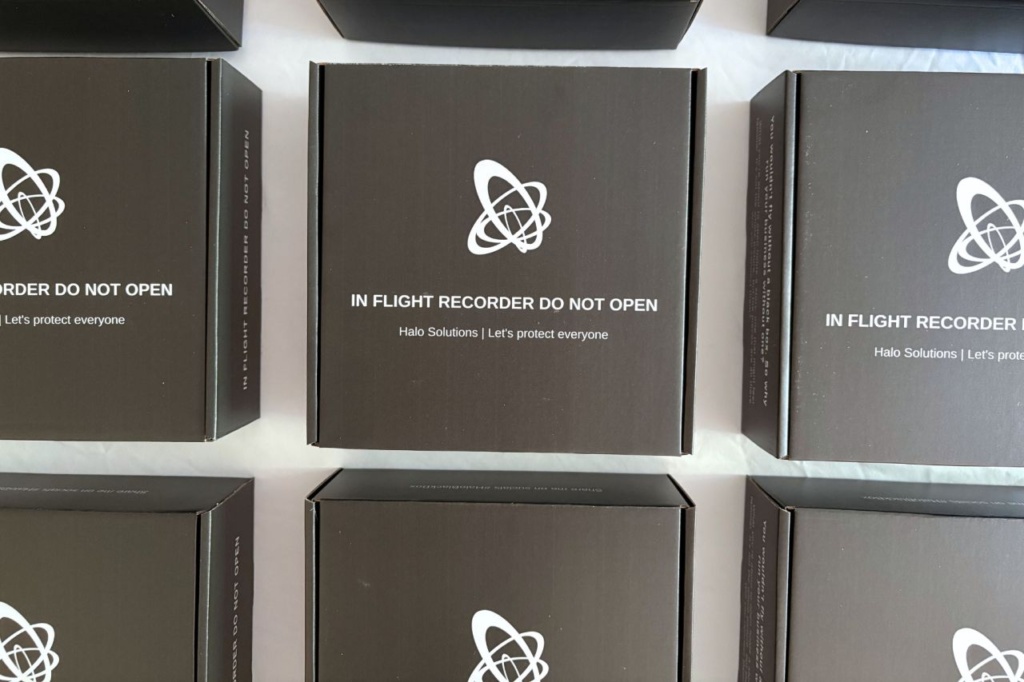
In autumn 2025, security systems company Halo Solutions chose to go against the grain. Instead of launching a conventional, product-led campaign built on rational selling points, they sent an unannounced black box to 100 carefully selected security directors at major arenas and transport hubs across Europe and the US.
Inside was a fragmented trail of evidence from a fictional incident – snippets of WhatsApp conversations, a crumpled logbook, disjointed timelines – along with a single instruction: figure out what happened.
At the very bottom sat a red envelope. Inside was a document, a complete, meticulously time-stamped account of the same incident, showing how it would have unfolded if managed through Halo’s system.
The physical drop was amplified by a tightly targeted digital follow-up of LinkedIn advertising, retargeting, email outreach, and demo offers via a dedicated landing page; intrigue did the rest. The hashtag #HaloBlackBox began trending on LinkedIn, giving the campaign a significant boost through global organic reach. The outcome was impressive: £430,000 in new business (TCV), alongside £1.5 million worth of influence on existing business.
“At its core, this campaign worked because it was built with empathy,” wrote Chloe Fox, Halo’s Marketing Director Chloe, in an article for B2B Marketing World. “It didn’t talk about the problem. It made the recipient feel it. (…) I didn’t just think about what our audience should care about; instead, we stepped into their shoes, recreated their day-to-day anxieties, and handed it back to them in a box.”
Technology is swinging the pendulum
What we’re seeing is a clear shift: from rational differentiation to emotional differentiation as the primary competitive edge. As AI floods the market with homogenised content, more and more offerings start to feel interchangeable. And when everything looks and sounds the same, decisions stop being purely rational – we go with gut instinct. This becomes even more pronounced in high-stakes B2B decisions; the greater the perceived risk, the more weight we place on subconscious signals like trust, familiarity and emotional resonance.
At KAN, we see this shift as closely tied to technological progress. A few years ago, as measurement and attribution became more precise, we noticed a tendency among marketing leads to weave more rational argumentation into brand building.
Similarly, we saw this same pattern during the early days of SEO. As ranking became a priority, messaging platforms were increasingly shaped to satisfy algorithms as much as audiences. Now, the pendulum is swinging back. Our clients are increasingly looking to differentiate through emotion across their entire marketing funnel, not just at the awareness stage.
Why emotional marketing works in the AI era
Emotionally driven marketing has been shown to be up to seven times more effective than rational approaches when it comes to long-term growth, because it builds relationships that last. This has been established, among others, by marketing experts Les Binet and Peter Field in The Long and the Short of It, their landmark study analysing 1,000 campaigns submitted to the Institute of Practitioners in Advertising Effectiveness Awards over three decades.
In that B2B Marketing World article, Chloe Fox describes emotional marketing as activating a kind of “muscle memory” in the audience. She argues that the AI transformation is pushing brands to differentiate with greater intent and that, as a consequence, marketers need to create more immersive, resonant experiences that connect on a deeper level.
“Sometimes, the smartest thing you can do in a world of screens is send a box no algorithm saw coming.”
– Chloe Fox, Head of Marketing, Halo Solutions
Ready to take the next step?
Together, we can identify opportunities and define your strategy for the way forward.